
Categories
First-Time Buyer Resources, Homebuyer EducationPublished April 20, 2026
The True Cost of Waiting for Interest Rates to Drop in 2026

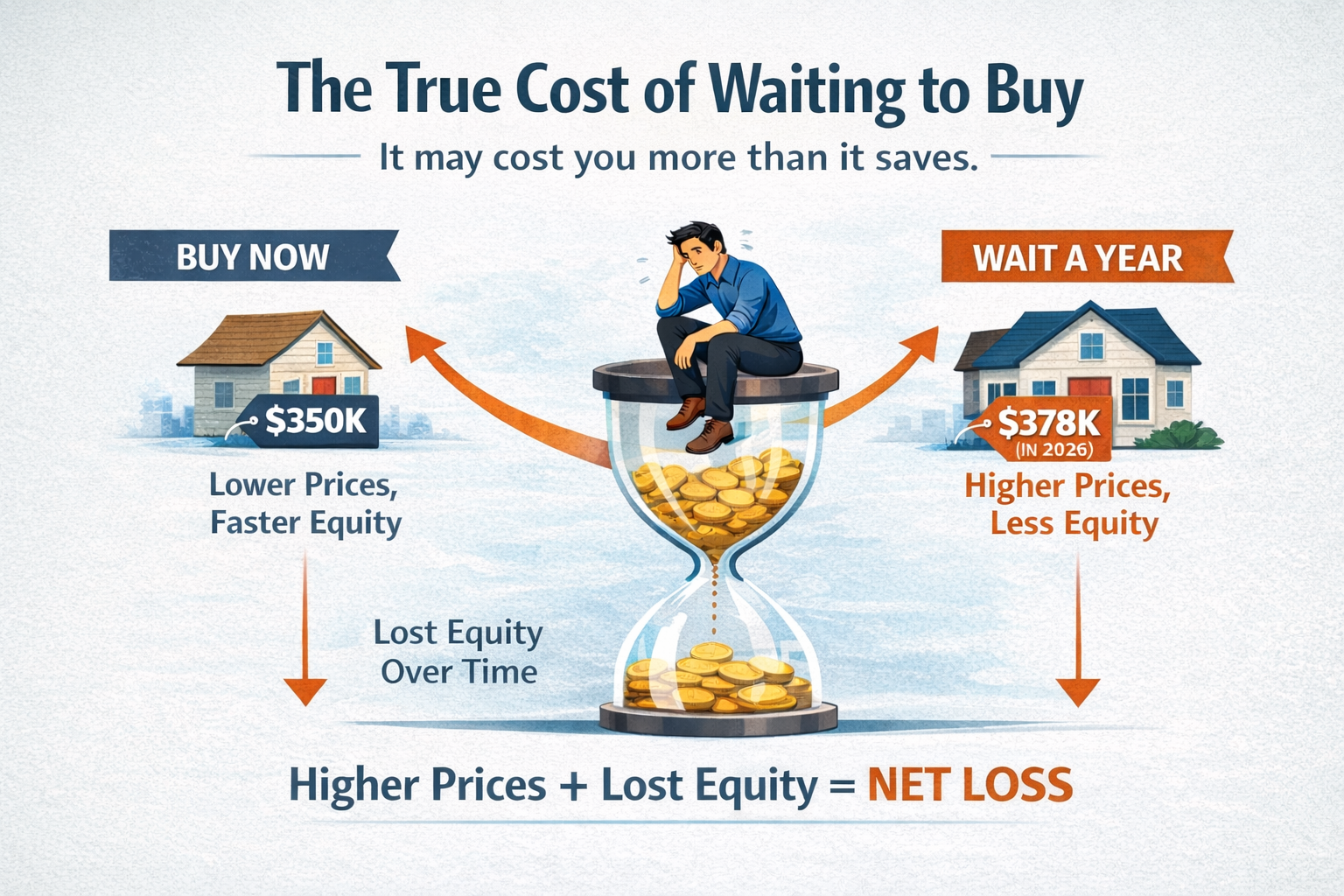
The True Cost of Waiting for Interest Rates to Drop in 2026
Should you wait until 2026 for lower interest rates before buying a home?
In most cases, waiting costs you more than it saves—because rising home prices and lost equity growth often outweigh any future rate reduction.
The Illusion of “Better Timing”
You’ve probably heard the advice: “Just wait until rates drop.” On the surface, that sounds logical. Lower rates mean lower monthly payments, right?
But here’s what that advice ignores: homeownership is not just about your rate—it’s about time in the market.
While rates may fluctuate, home values and equity growth move on their own timeline—and they don’t wait for you.
The Two Costs of Waiting
When you delay a purchase, you’re not standing still financially. You’re moving backward in two key ways:
1. Rising Home Prices
Even modest appreciation compounds over time.
- A $350,000 home growing at 4% annually becomes:
- ~$364,000 in one year
- ~$378,500 in two years
- ~$364,000 in one year
That’s $28,500 more for the same home—before even factoring in bidding competition if rates drop.
2. Lost Equity Growth
When you own, every payment builds wealth through:
- Principal paydown
- Market appreciation
When you rent, that opportunity disappears.
If you wait two years:
- You miss out on 24 months of principal reduction
- You miss out on compounded appreciation gains
That’s not delayed equity—it’s permanently lost equity
The Rate Drop Trade-Off
Let’s say rates drop from 7% to 5.75% in 2026.
Sounds like a win—but here’s the trade:
- You save on monthly payments
- BUT you:
- Buy at a higher price
- Compete with more buyers
- Lose years of equity growth
- Buy at a higher price
In many scenarios, the higher purchase price cancels out the lower rate benefit entirely.
And here’s the strategic edge most buyers miss:
👉 You can refinance a rate later
👉 You cannot retroactively buy at yesterday’s price
The Compounding Effect: Where the Real Loss Happens
The real cost isn’t just higher prices—it’s the compounding gap created over time.
By waiting:
- Your starting loan balance is higher
- Your equity curve starts later
- Your wealth-building timeline shifts backward
This creates a net financial deficit that often exceeds any savings from a lower interest rate.
Why Timing the Market Backfires
Trying to “time” the market assumes:
- You’ll predict rate movements accurately
- Prices won’t react to those changes
- Buyer demand will stay constant
Historically, that’s rarely how it plays out.
When rates drop:
- Demand increases
- Prices accelerate
- Negotiation power shrinks
So the window you’re waiting for often becomes more competitive, not more affordable
The Strategic Move Most Buyers Miss
Instead of waiting for the “perfect” rate, consider this:
- Buy when you’re financially ready
- Lock in today’s price
- Build equity immediately
- Refinance later if rates improve
This approach keeps you in control of:
- Your purchase price
- Your timeline
- Your long-term wealth growth
Final Takeaway
Waiting for interest rates to drop in 2026 might feel like a safe strategy—but in reality, it often leads to a net financial loss.
You’re not just waiting on rates.
You’re giving up:
- Appreciation
- Equity
- Leverage
- Opportunity
And those losses compound faster than most buyers realize.
If you’re trying to decide whether to buy now or wait, the smartest move is to look at your full financial picture—not just interest rates.
Let’s walk through your specific scenario and map out the numbers so you can make a confident, strategic decision.
This blog was written with the assistance of AI and reviewed for accuracy and clarity.
Tracy Jones
CEO, Team Owner, & Associate Broker | The Tracy Jones Team | Keller Williams Elevate
or another way